FemiBoyede Consulting

Galleries

Non Oil Exports for the Survival of Nigeria’s Economy

dock, container, export-441989.jpg

Non-oil Export is the answer to Nigeria’s dwindling economy.

As Nigeria’s economy continues to face myriads of challenges causing constant instability and increasing hardship in the country, experts have recommended that prioritizing non-oil export is the answer. If gotten right, this singular action will redefine Nigeria’s economy. The Acting Executive Secretary of the Network of Practicing Non-oil Exporters of Nigeria (NPNEN), Mrs. Titi Ojo made this recommendation in a virtual presentation during the March edition of the monthly, Talking Trade with Olufemi Boyede. The March session was themed “Export For Survival: and was equally echoed by other non-oil export professionals and practitioners. “Economically, in Nigeria, things are in shambles. In a country where the oil sector accounts for up to 95% of Nigeria’s foreign exchange earnings and 80% of budgetary revenues. Export is the answer, not draconian regulatory policies showing up from nowhere,” Titi Ojo affirmed. Referring to 2020 when a barrel of crude oil became cheaper than a bottle of soft drink in Nigeria while the world grappled with the ravaging COVID19 pandemic. “No one was interested in buying crude oil. That offered a clear opportunity for a possible turning point in Nigeria’s economy. In the last quarter of 2018, non-oil export was as low as 3.4%, an extreme contrast to the 1960s when Nigeria’s non-oil export accounted for more than 66% of Nigeria’s total export. It was disturbing to read the IMF report which reported that while countries like Tanzania and Cameroon had added 95 new exportable products between 1990-2022; Nigeria had only added 7 new products during these 30-year period.” Mrs. Ojo acknowledged that the Nigerian Export Promotion Council (NEPC), under the leadership of Dr Ezra Yakusak is making deliberate efforts to get more Nigerians to embrace the export of made in Nigeria products to boost the country’s economy and attract FDIs. According to her, NEPC is working assiduously to create an enabling environment for exporters and working on the enactment of enabling laws to drive export.
Highlighting other dilemmas that non-oil exporters face, Mrs Titi Ojo listed the following: Delayed port times. In Nigeria, it can take 45 days to clear your container, compared to 5-10 days in neighbouring African countries Lack of flexible financing for exporters. Lack of synergy between exports supporting MDAs of governmentsLack of an enabling environment, policies and regulations. Making recommendations, Titi Ojo suggested a few options that should be part of Nigeria’s strategy to advance the country’s success in the non-oil exports sector: Invest in the procurement of data to be used for evidence-based advocacy. A good analysis of the data available will help show the situation’s criticalness. Extend consultation with the necessary government agencies and bodies. Give feedback on the performances of ongoing reforms by using the reporting tools at reportgov.ng and other such websites. In conclusion, Titi Ojo said, “Export for Survival is not just a cliché, and it should be given the attention it deserves urgently.” She called on MDAs of the government to synergise effectively to achieve the agenda of Nigeria’s export survival and make sure there is a “solid handshake” between governments and the private sector.

Non Oil Exports for the Survival of Nigeria’s Economy Read More »

AfCFTA: The Challenges Ahead
africa, continent, map of africa-60570.jpg

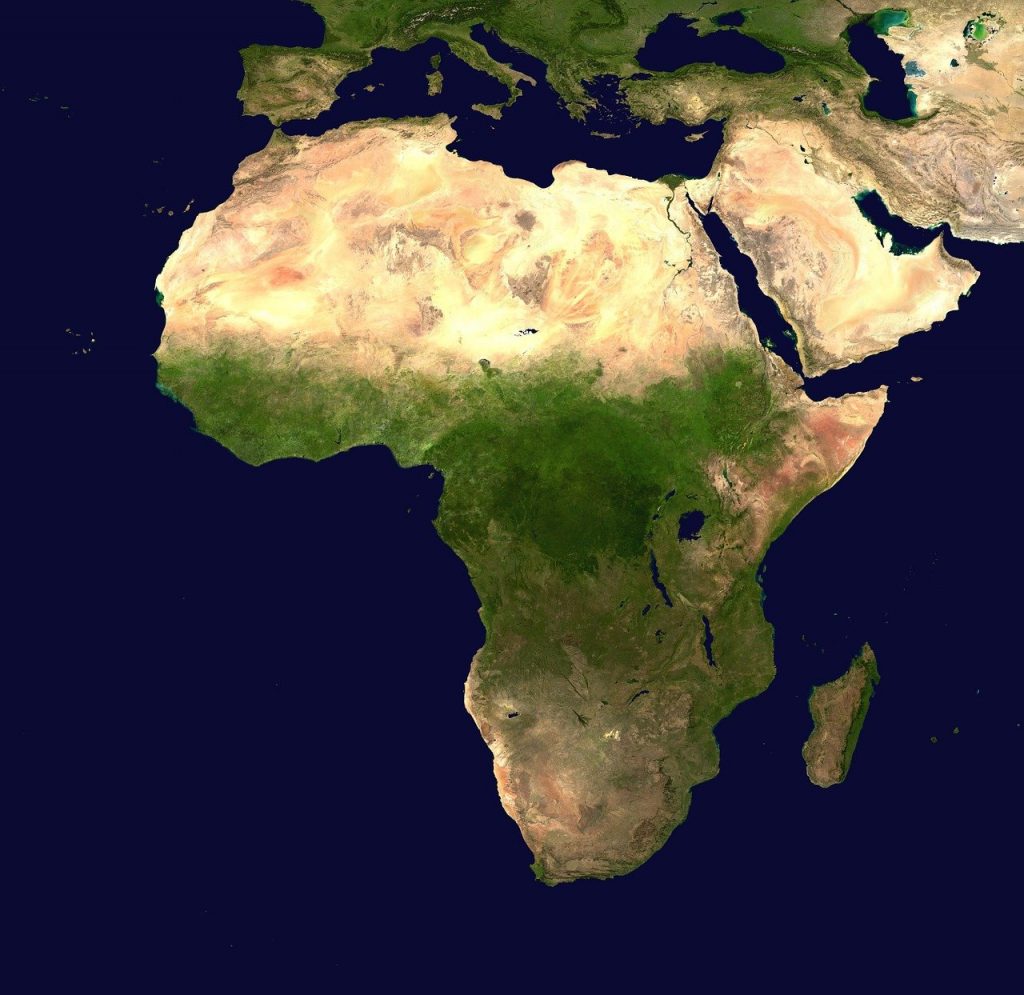
While there is no doubt AfCFTA will bring significant benefits to the member states of the AU as a whole, there are some challenges and possible obstacles ahead. Since its early adoption in 2018, there were a few delays due to Covid 19. To date, 54 of the AU countries have signed up (leaving only Eritrea yet to sign). Thirty-five countries have ratified the agreement.
Some experts have compared this audacious project as a vision similar to forming the European Customs union, which has taken some 50 years to tweak and become a practical, functional and beneficial union. The AfCFTA agreement will need to work closely with the existing African 8 Regional Economic Communities to sort out the issue of overlapping memberships within the RECs8. Countries belonging to multiple RECs could lead to different tariffs, standards or Rules of origin being applied to the same product. Also, some of these RECs do not have Free Trade Areas, which are required for trade liberalization.

 
A few countries like Nigeria (one of the last few to sign on to the agreement) argue that trade liberalization may not necessarily work in their favour. Generally, intra-Africa trade activities do not feature high on Nigeria’s list of priorities. As a country, Nigeria is more dependent on its exports to countries outside Africa. Recently, in an effort to reduce its dependence on imports and encourage local manufacturing, Nigeria closed its borders, increasing its protectionism measures. Any country may decide to carry out some temporary protectionism measures if they feel some internal industries are negatively affected. These areas need to be scrutinized more closely to ensure all economies, large or small, are comfortable with the trade liberalization that comes with the AfCFTA agreement.
Some countries also have unilateral deals with overseas countries, e.g. Kenya is negotiating a trade deal with the US, while the UK, following its exit from the EU, is seeking trade deals with some AU countries, individually. It is yet to be seen how AfCFTA will handle these types of arrangements, but the growing trend to seek such trade deals abroad may lead to problems in the future.
There are also concerns that smaller countries may not be able to put proper structures in place that will allow them to maximize the vast benefits AfCFTA will purportedly bring. Liberalization may end up hurting the smaller economies. The agreement promises to protect smaller economies from losing out to the more significant economies by having a differential liberalization schedule.
There is no doubting that many other concerns and issues will need to be ironed out as time progresses, but overall, once the necessary technological, digital, financial governance, industrialization upgrades and platforms are set up and firmly in place, Africa can start to look forward to a brighter future with the full implementation of AfCFTA.


Footnotes

AfCFTA: The Challenges Ahead Read More »